Anthropic's Long Term Benefit Trust has a revolving door problem
Tino previously served on the company’s independent oversight board, the long-term benefit trust… raising questions about the board’s independence.

Originally published on Twitter/X.
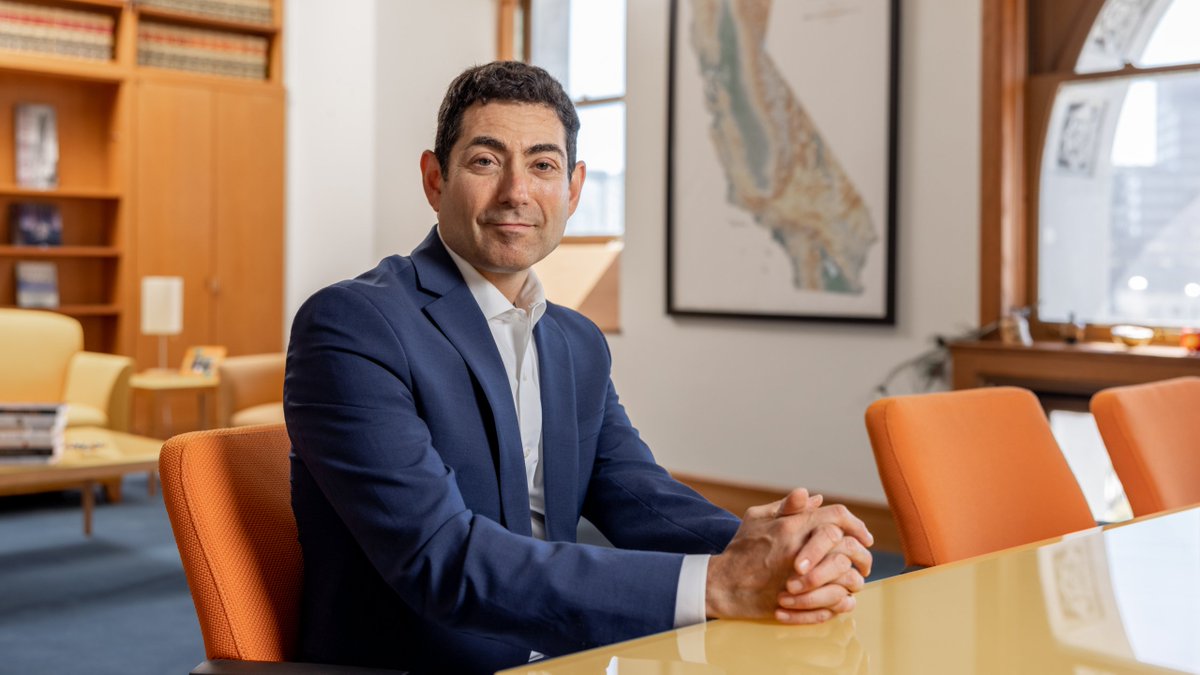
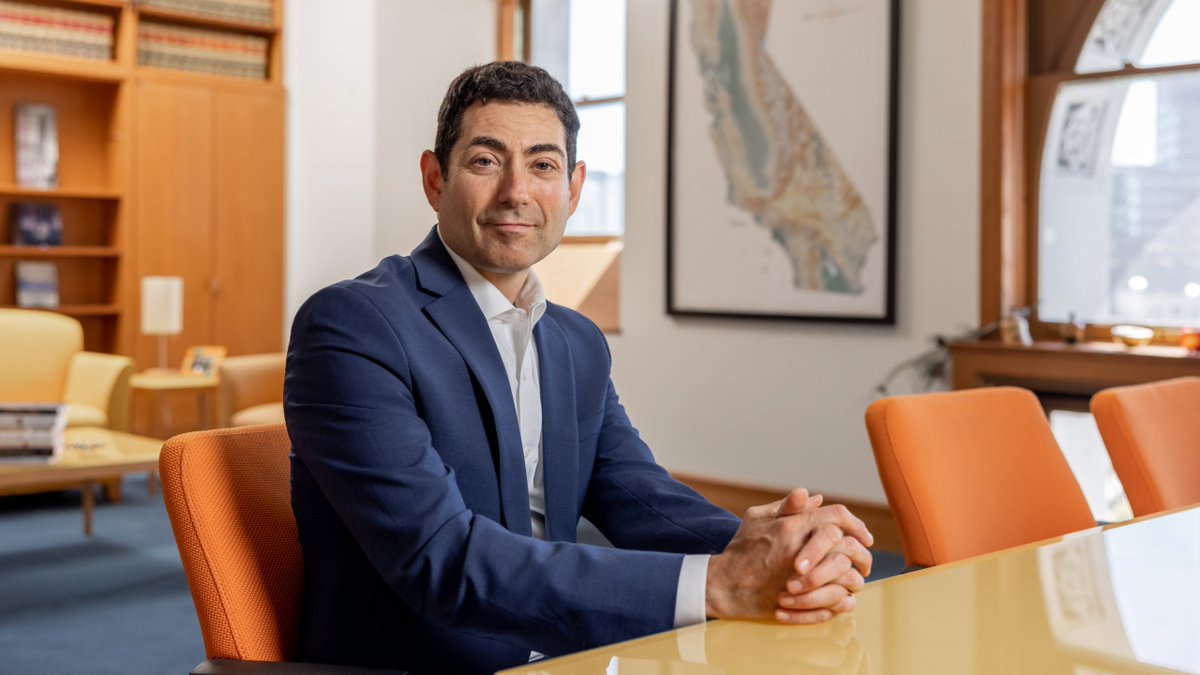
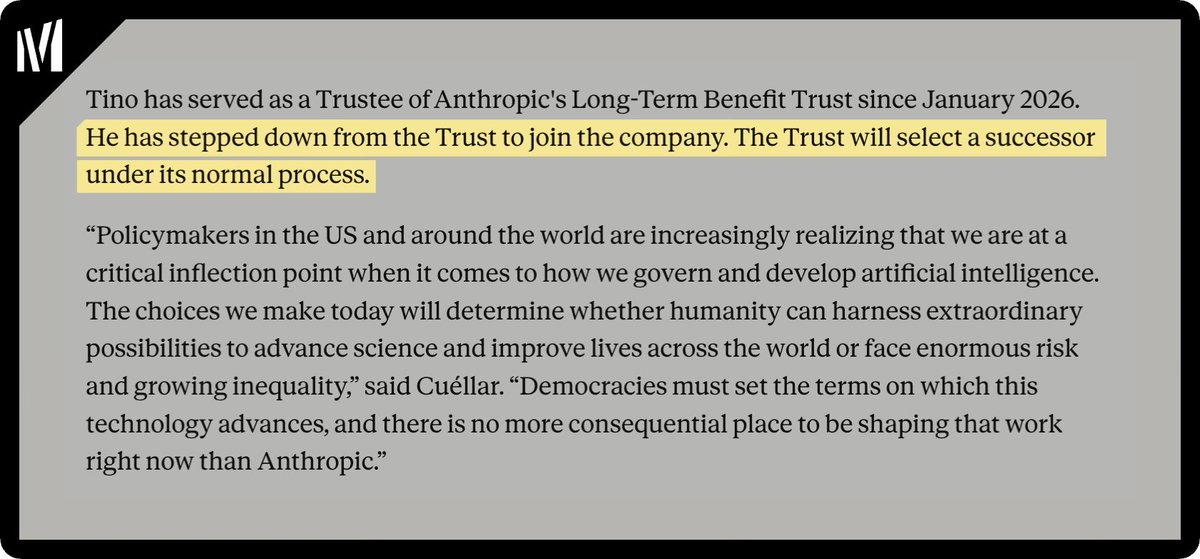
Anthropic recently hired Mariano-Florentino "Tino" Cuéllar as its first Chief Global Affairs Officer.
But Tino previously served on the company’s independent oversight board, the long-term benefit trust… raising questions about the board’s independence.
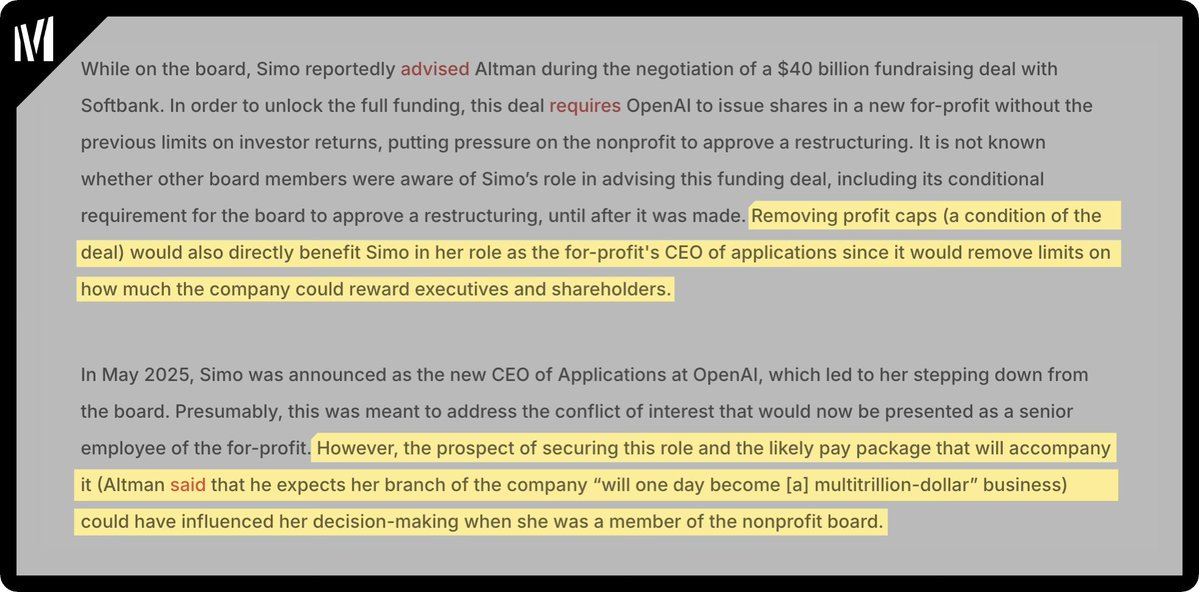
Some background: last year, when we released The OpenAI Files, we criticized OpenAI’s choice to hire Fidji Simo off the nonprofit board and appoint her CEO of applications.
The core of the issue is one of independence: the nonprofit board was making extremely thorny decisions about the company’s restructuring that required balancing the nonprofit mission against the vast financial incentives created by investor pressure, IPO requirements, and the value of commercializing AGI.
For a board member who was deliberating on OpenAI’s restructuring – with a sole duty to the nonprofit mission – to go on to (presumably) receive compensation and equity in the company poses a real threat to the independence of the decision-making process.
For example, decisions about whether to remove the profit caps would bear on equity she would soon earn, and investor interest in the company would determine the value of that equity. Making difficult choices in service of the mission could have cost her, personally, millions of dollars.
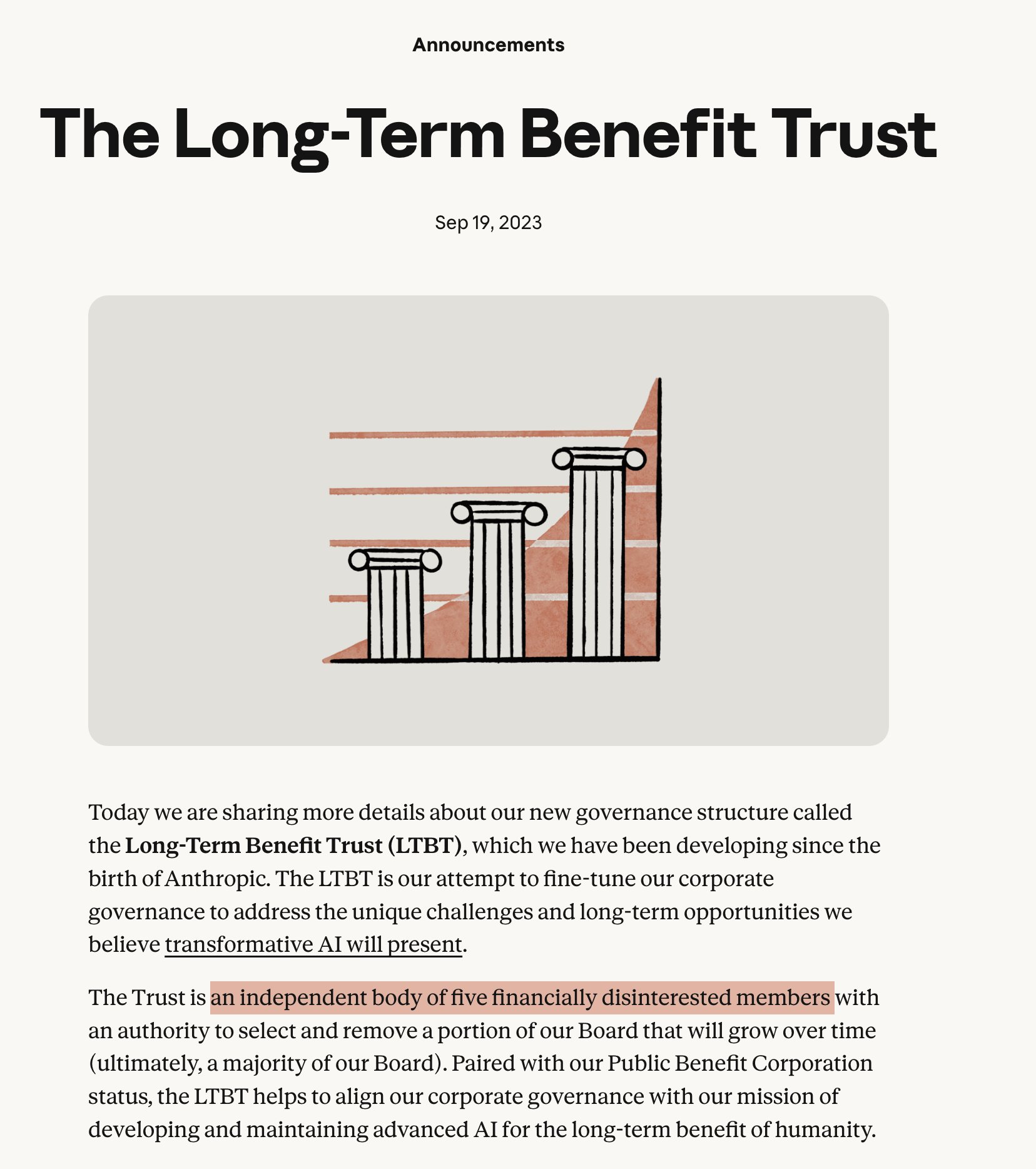
Anthropic is now in a similar position as OpenAI. They aren’t a nonprofit, so they aren’t overseen by an independent nonprofit board like OpenAI was. However, they are overseen by a body they call the Long-Term Benefit Trust (LTBT). This body is meant to comprise “financially disinterested” members with the authority to oversee Anthropic.
In particular, they are meant to have the authority and the will to make difficult decisions that prioritize the public when doing so conflicts with commercial success. By having no equity and no compensation tied to Anthropic’s financial performance, the LTBT is meant to be the impartial watchdog, insulated from the intense market pressures of the AI race, and making decisions only with the public interest in mind.
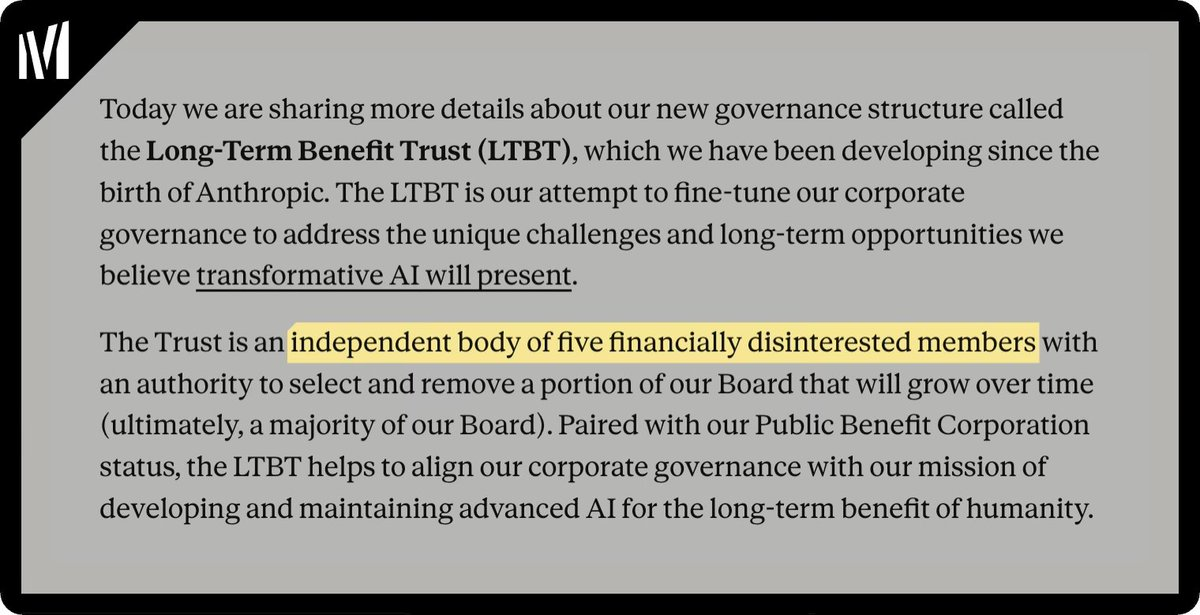
But now, they've taken steps to create a revolving door between the company and its oversight body.
Tino was previously a member of the LTBT, and is now stepping down to take his new role. By taking a member off the LTBT and handing them a leadership role (Tino reports directly to Daniela Amodei), the “financially disinterested” firewall has begun to break down. In his new role, Tino will likely receive substantial compensation and equity tied to Anthropic’s continued commercial success.
Of course, Tino is no longer on the LTBT, so this isn’t a problem for his own independence moving forward. But the precedent it sets for the LTBT as a whole is concerning. If a seat on the LTBT is seen as a stepping stone to a highly lucrative executive position at the company, the incentive to vigorously challenge leadership, and to make difficult decisions that prioritize the public above the pecuniary interests of the company, starts to evaporate.
Now that this precedent has been set, future LTBT trustees may have this possibility in mind when they are making decisions. In fact, Anthropic — if they want to change the composition of the LTBT, and in particular, remove a member they disagree with — could use well-compensated recruitment offers as a tool to do so (knowing that accepting the role will require stepping down from the trust).
If companies like OpenAI and Anthropic want us to trust that their governance is truly independent, at a minimum, they should consider implementing “cooling-off” periods such as those used by corporate auditors, stock exchanges, and government officials.
Even better, they should consider going a step further and never compensating their governing board members as a matter of policy, even after their terms have expired.
Otherwise, they risk creating a revolving door that could threaten the effective governance of the most important companies in history.
Research, updates, and insights from the frontlines of AI accountability.
We lead strategic initiatives to monitor tech companies, counter corporate propaganda.
OpenAI wrote a safety framework for California. Its system cards are ignoring it.
Meta's policy on securing model weights is embarrassingly weak.
OpenAI’s research is too important to be turned into propaganda

The Midas Project Joins Coalition Warning about xAI’s Track Record in light of SpaceX’s IPO
The Midas Project, alongside a coalition including Encode, Legal Advocates for Safe Science and Technology, and Guidelight AI Standards, released "xAI: The Unpriced Risk in SpaceX's IPO."
Frequently asked questions
Have more questions? Our team is happy to help, contact us.