OpenAI’s motion against Stuart Russell contradicts what OpenAI has said for years
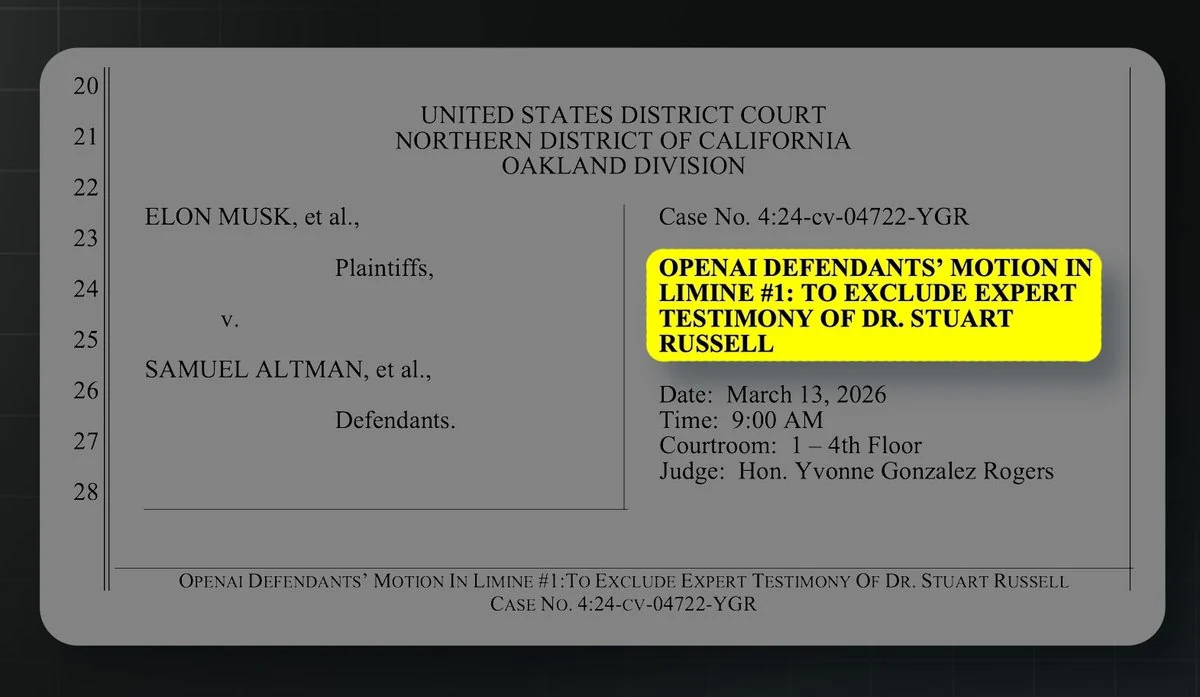
A new filing just dropped in the Musk v. Altman case, and it may be the most brazen and cynical document OpenAI has produced yet.


Analysis originally shared on Twitter/X
A new filing just dropped in the Musk v. Altman case, and it may be the most brazen and cynical document OpenAI has produced yet. It's a motion to exclude the testimony of Stuart Russell, but their attacks blatantly contradict things OpenAI itself has said for years.
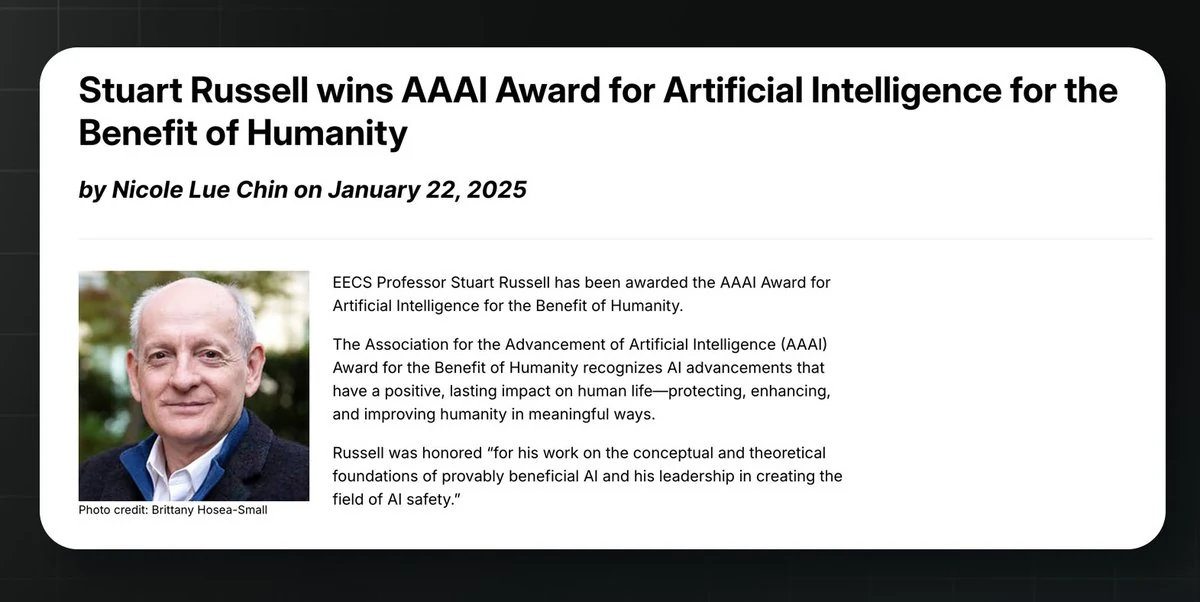
For context, Stuart Russell is an AI professor and a Fellow of the Royal Society. He won the 2025 AAAI Award for AI for the Benefit of Humanity, TIME named him one of the 100 most influential people in AI, and he has testified before the U.S. Senate.
But OpenAI's motion calls Russell a "prominent AI doomer" who has "made a career giving public lectures warning that AI might kill off humanity." It dismisses his views as "dystopian," "speculative," and "alarmist."

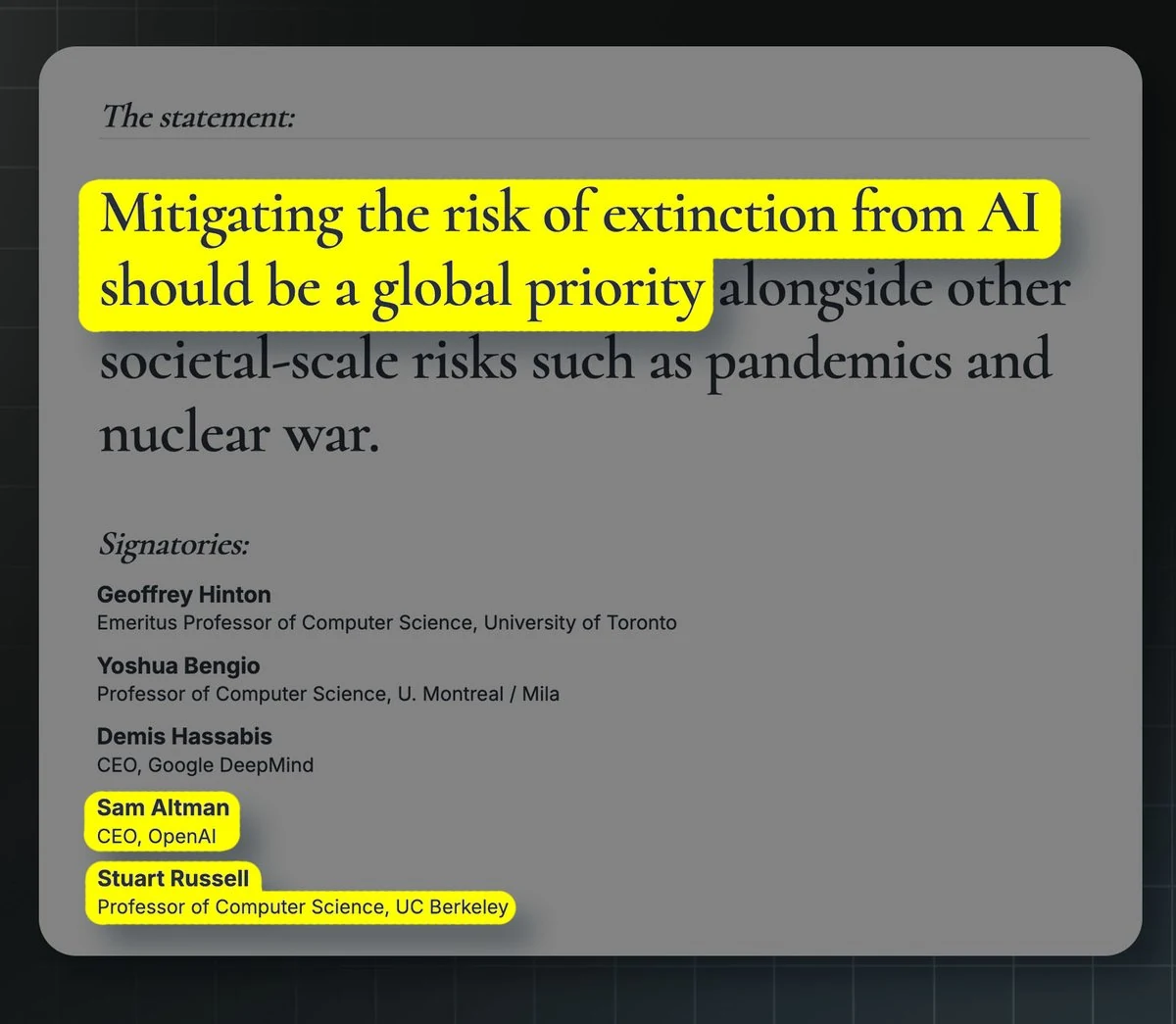
But these very risks have been acknowledged by OpenAI for years! In fact, they were central to its founding. Russell joined Sam Altman himself in signing the Statement on AI Risk in 2023, which reads: "Mitigating the risk of extinction from AI should be a global priority."
And it goes well beyond that one statement.
In 2015, Altman said, "I think that AI will probably, most likely, sort of lead to the end of the world." In an interview about worst-case scenarios, he said the bad case is "lights out for all of us."

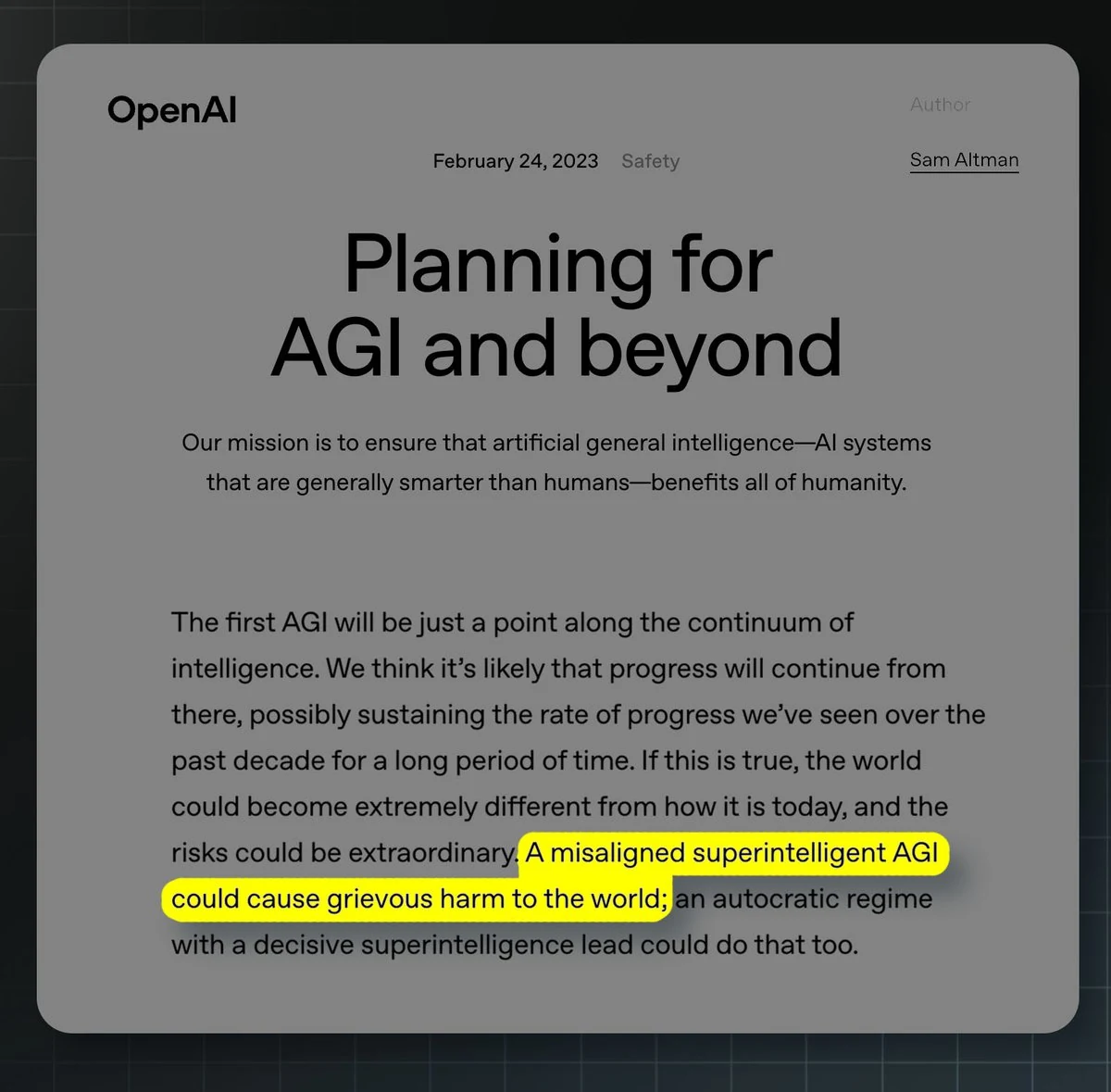
Moreover, in his 2023 blog post "Planning for AGI and beyond," Altman wrote that "a misaligned superintelligent AGI could cause grievous harm to the world."
Further strengthening the case, OpenAI's Superalignment announcement in July 2023 stated that AI could lead to "human extinction" and "we don't have a solution for steering or controlling a potentially superintelligent AI, and preventing it from going rogue."
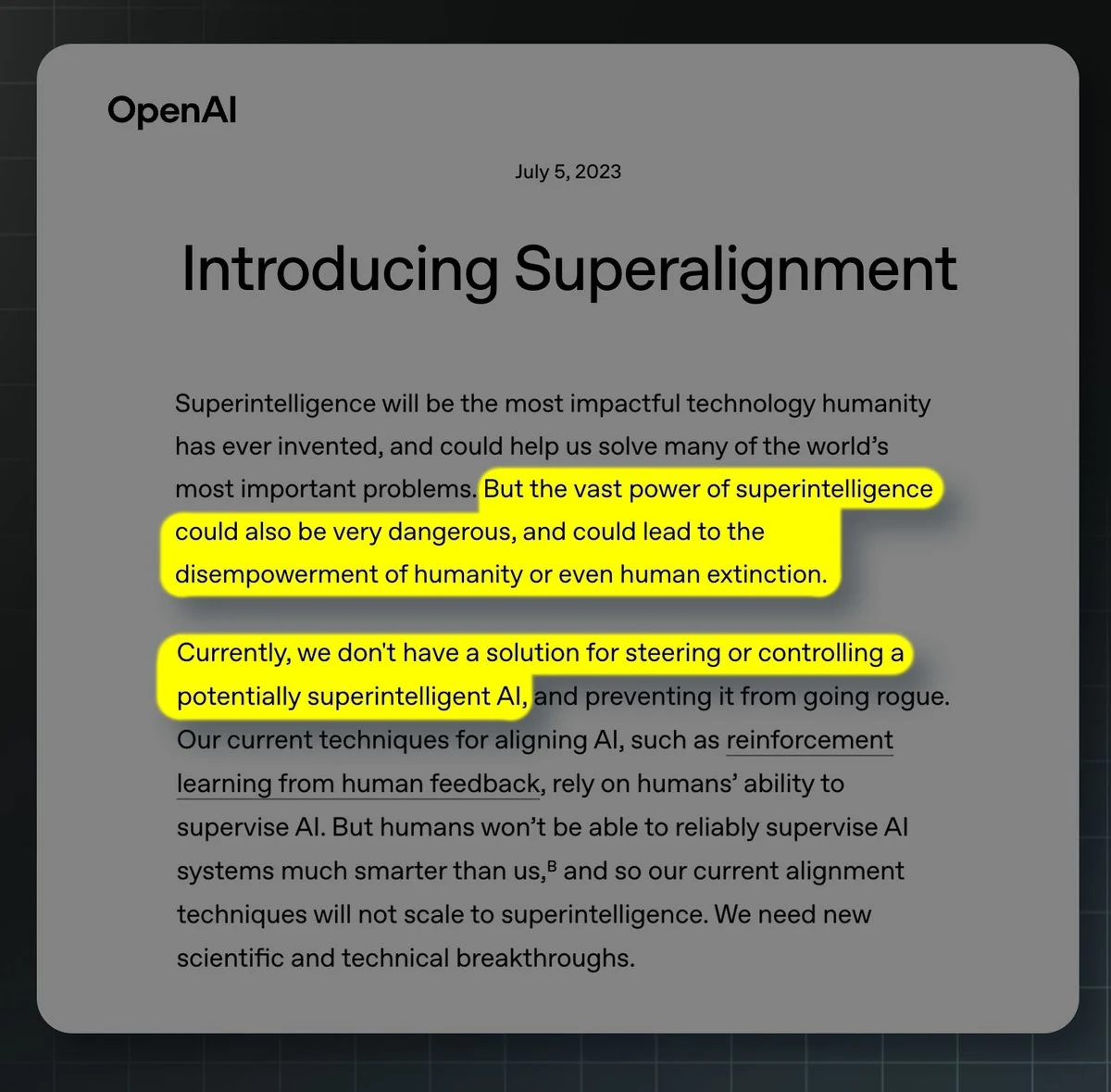
So when OpenAI's lawyers call Russell a "doomer" for warning about AI risk, they are describing a position that OpenAI's own CEO has stated repeatedly in stronger terms...
The filing also attacks Russell for his "speculative and unreliable" view that AI could automate human labor, treating this as alarmist fearmongering that has no place in a courtroom.
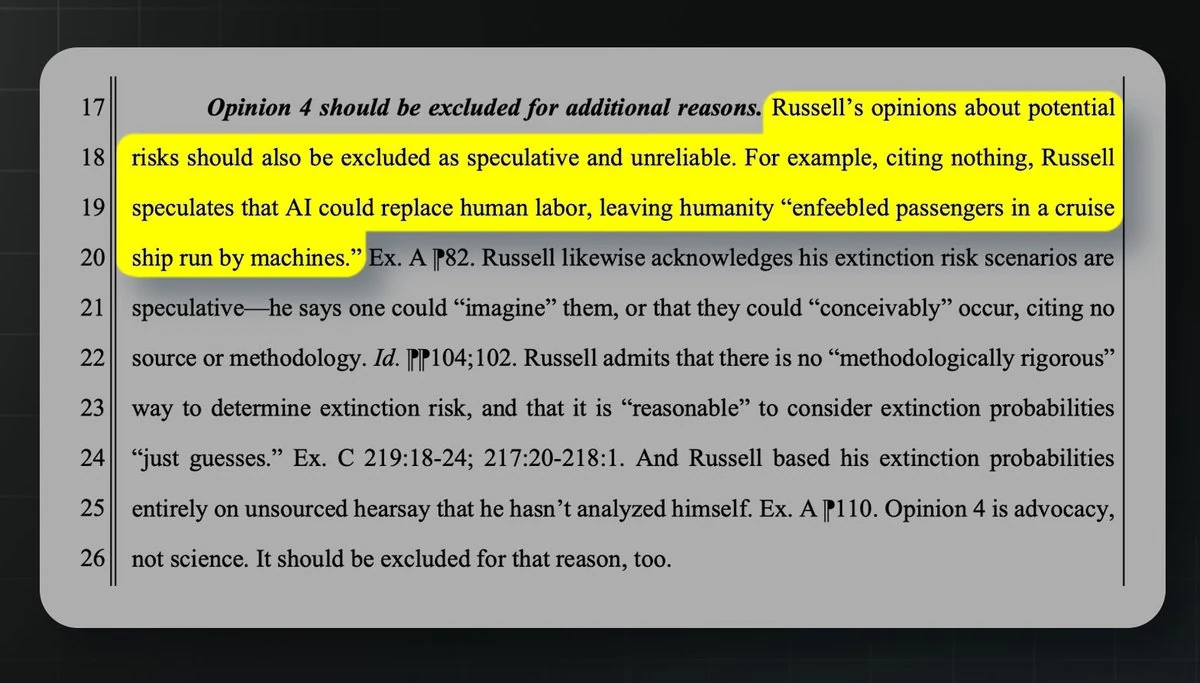
OpenAI's charter defines AGI, which Altman is "now confident [they] can build," as "highly autonomous systems that outperform humans at most economically valuable work."
The company's founding beliefs are centered around the tech that Russell is called alarmist for discussing.

Sam Altman wrote a whole essay in 2021 called "Moore's Law for Everything" arguing that AI will do "almost everything" in the economy and "the price of many kinds of labor will fall toward zero once sufficiently powerful AI joins the workforce."

He funded a massive UBI study because he believes AI will eliminate jobs.
In 2019 he said "all repetitive human work that doesn't require the deep emotional connection between two people" will be done "in the next couple of decades better, cheaper, and faster by AI."

Altman has said that AI tools will soon be able to do even the things that today only the most talented humans can do, and that this is not great for "individual jobs."

Altman has built his entire public profile around the claim that AI will transform the labor market. His lawyers are now arguing that this same claim is too speculative for a courtroom.
The filing also argues that whether AI companies are in a "race" that could compromise safety is "irrelevant," and that Russell's claim is "based on nothing more than Russell's say-so."
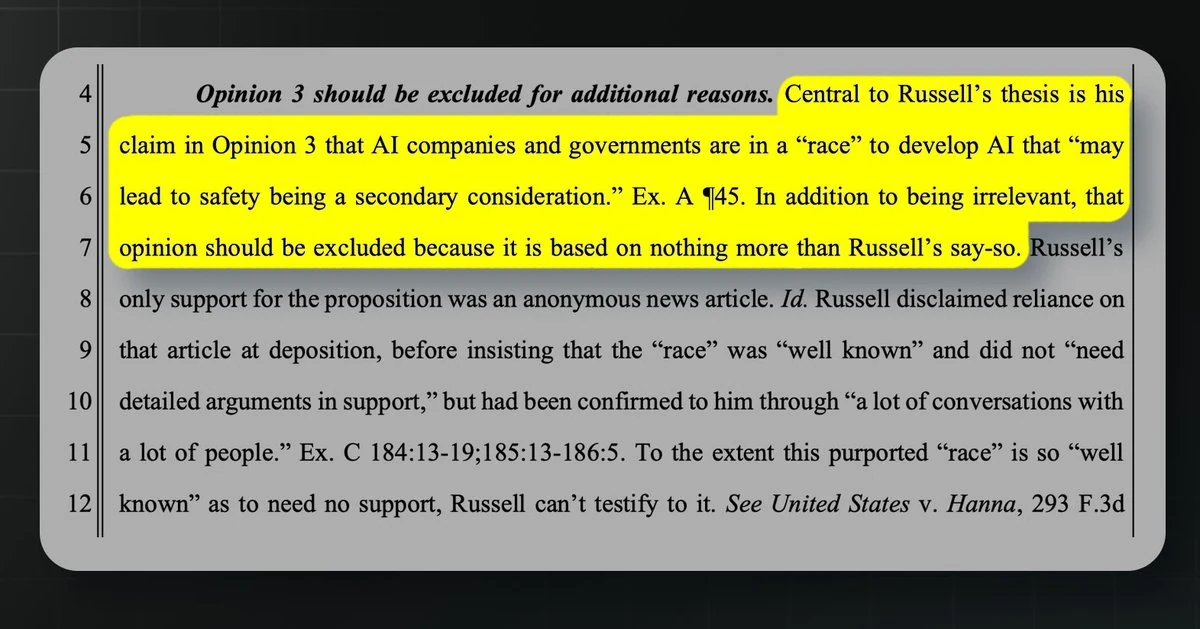
But... OpenAI's own charter says "We are concerned about late-stage AGI development becoming a competitive race without time for adequate safety precautions." That is almost word-for-word the concern that OpenAI's lawyers are now writing off as baseless speculation.

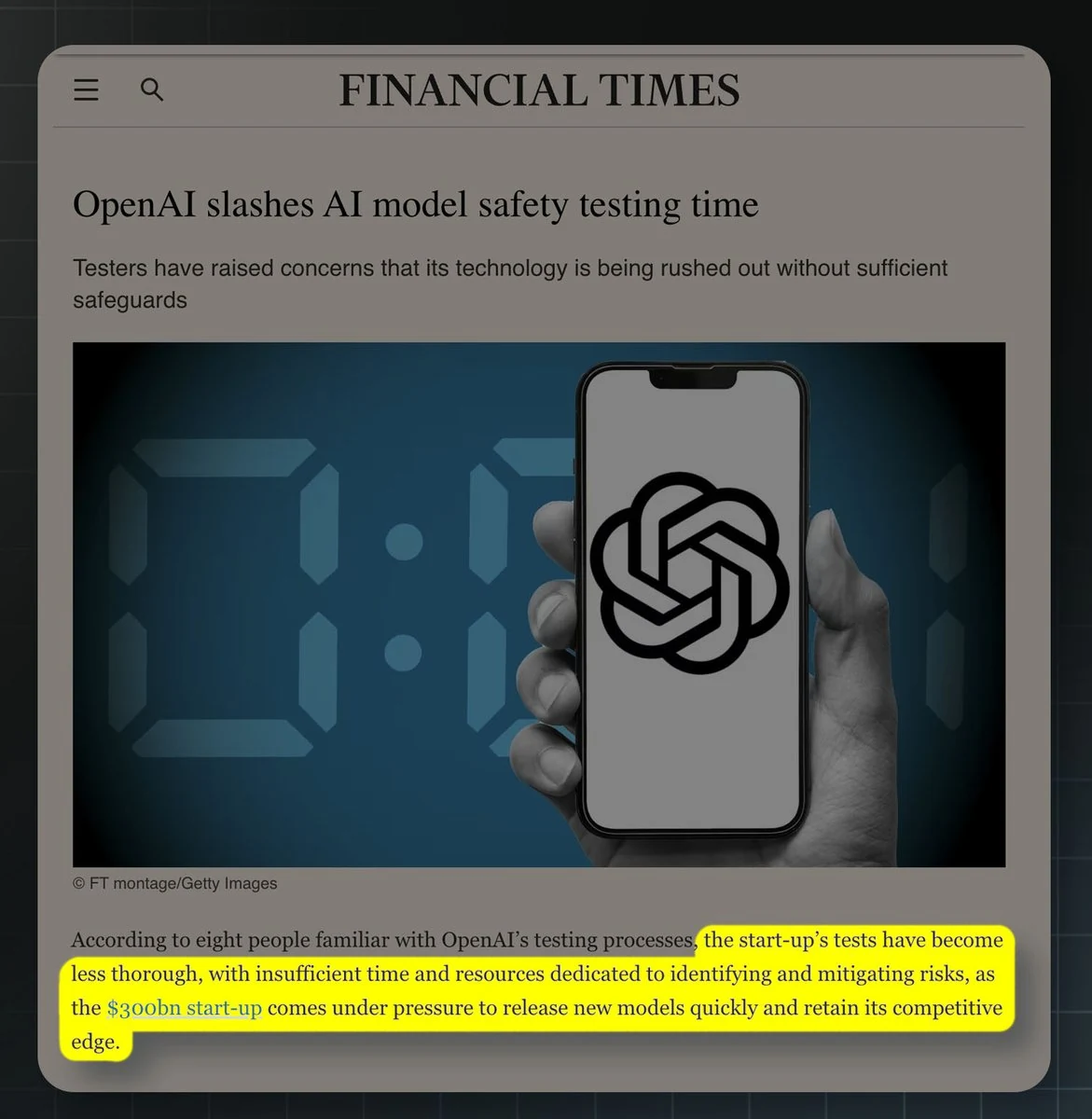
OpenAI should know this well, given reporting has indicated that safety testing for GPT-4o was compressed significantly to meet a launch deadline, and resources for testing have been cut due to competitive pressures.
Just yesterday, Anthropic announced it was revoking significant parts of its past safety commitments on account of the race dynamics that are widely understood to be impacting the industry.
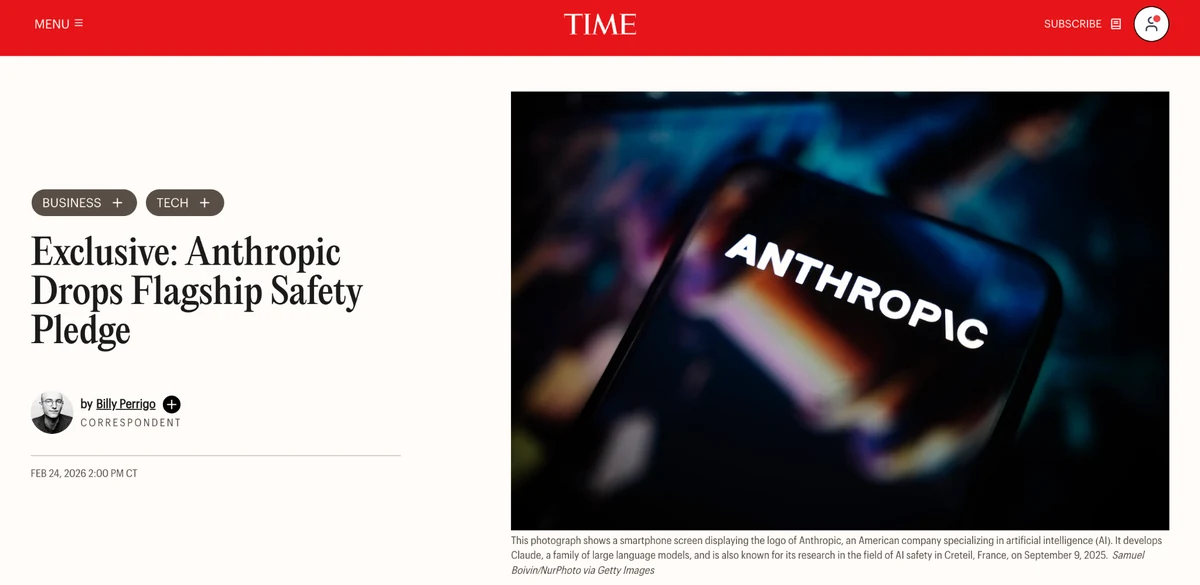
The filing asks the court to treat the idea that an AI race might compromise safety as irrelevant speculation, but OpenAI's own recent history of cutting corners on safety suggests it is more than a hypothetical.
Take a step back and look at what is happening here.
OpenAI is asking a court to exclude an expert for holding views that its own CEO has stated publicly, that it built its charter around, and that it used to raise billions in funding.
OpenAI has accused Elon of spreading "false narratives" and being "beyond dishonest" in his own court filings in this case. (And we ourselves released a thread earlier today accusing him of hypocrisy around AI and autonomous weapons.)
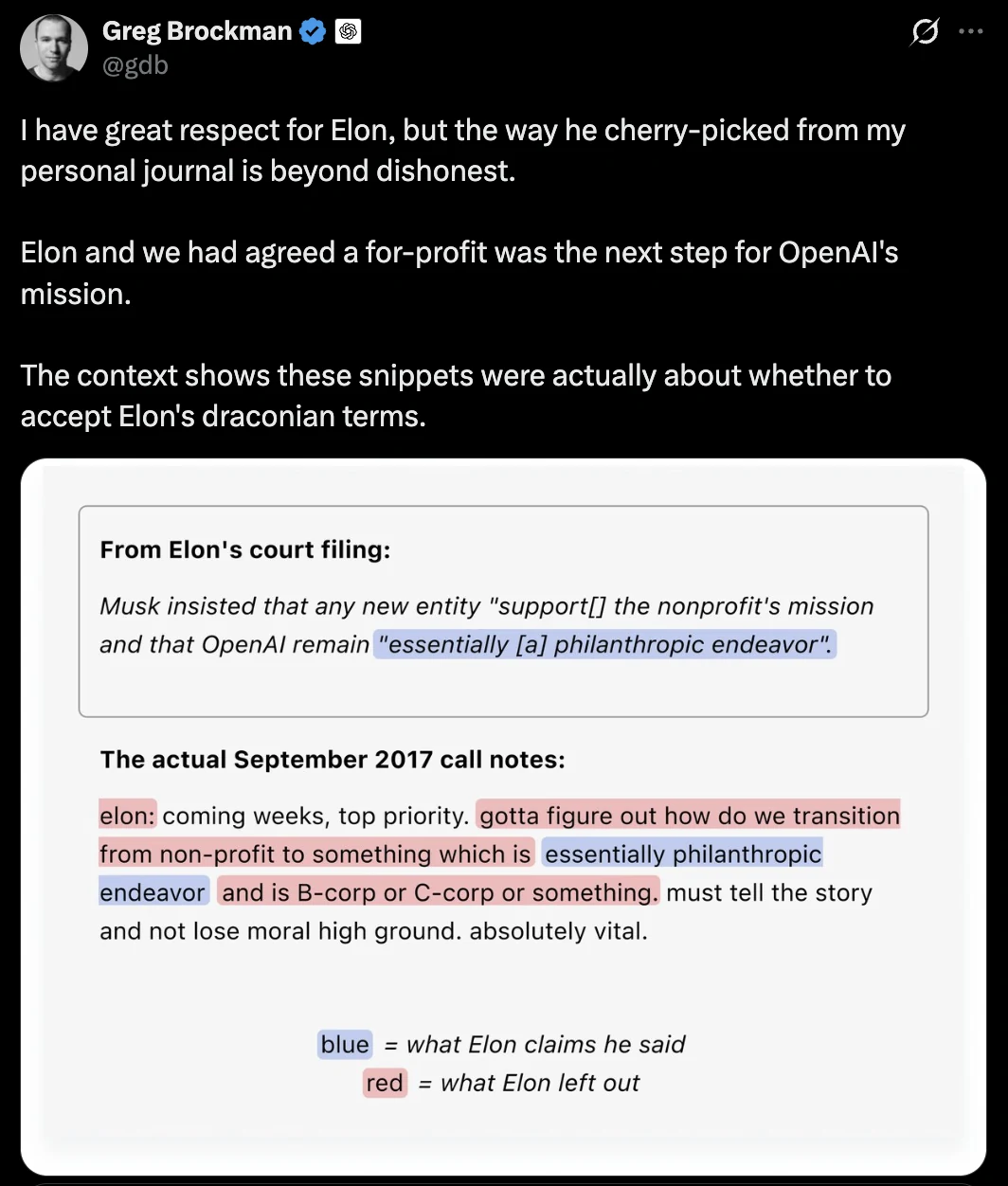
But OpenAI's own argument would be much stronger if they didn't turn around and exhibit their own blatant hypocrisy, leveraging opportunistic legal arguments that contradict their own long-held beliefs about the most important risks AI poses to society.
Research, updates, and insights from the frontlines of AI accountability.
We lead strategic initiatives to monitor tech companies, counter corporate propaganda.
Who paid right-wing influencers to promote Nvidia chip sales to China?
Hundreds of fake accounts defended Jensen Huang and attacked lawmakers over chip exports.
It has been a month. Where’s Muse Wonder’s safety report?
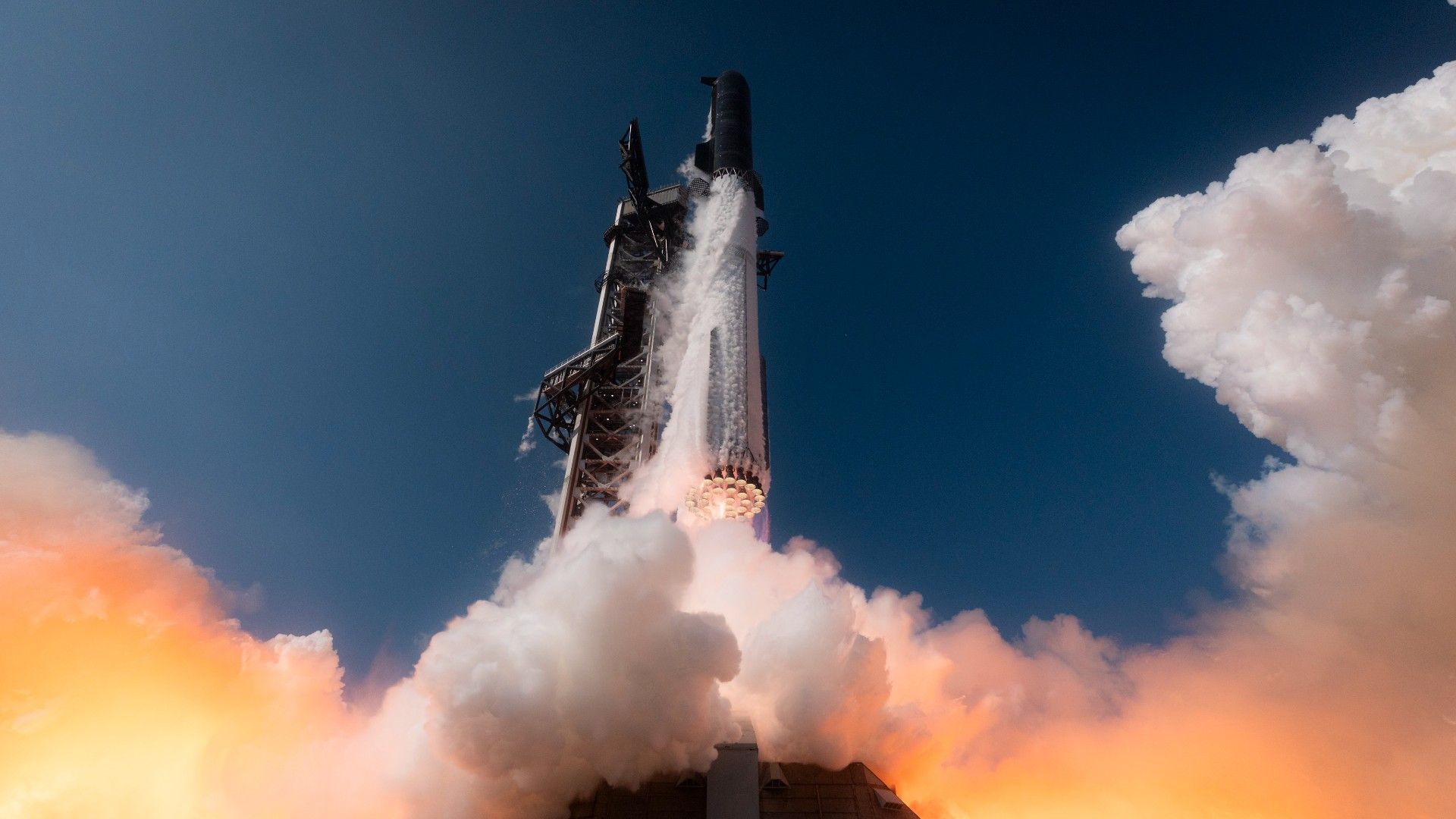
The Midas Project Joins Coalition Warning about xAI’s Track Record in light of SpaceX’s IPO
The Midas Project, alongside a coalition including Encode, Legal Advocates for Safe Science and Technology, and Guidelight AI Standards, released "xAI: The Unpriced Risk in SpaceX's IPO."
Frequently asked questions
Have more questions? Our team is happy to help, contact us.