What Anthropic’s S-1 reveals about its Long-Term Benefit Trust
Anthropic's S-1 is out, and with it the previously private documents behind its Long-Term Benefit Trust, the independent body Anthropic has long touted as its way of binding itself to the mast. But can it live up to its aspirations?


Analysis originally shared on Twitter/X
Anthropic's S-1 is out, and with it the previously private documents behind its Long-Term Benefit Trust, the independent body Anthropic has long touted as its way of binding itself to the mast.
But can it live up to its aspirations? Here's what the fine print shows.
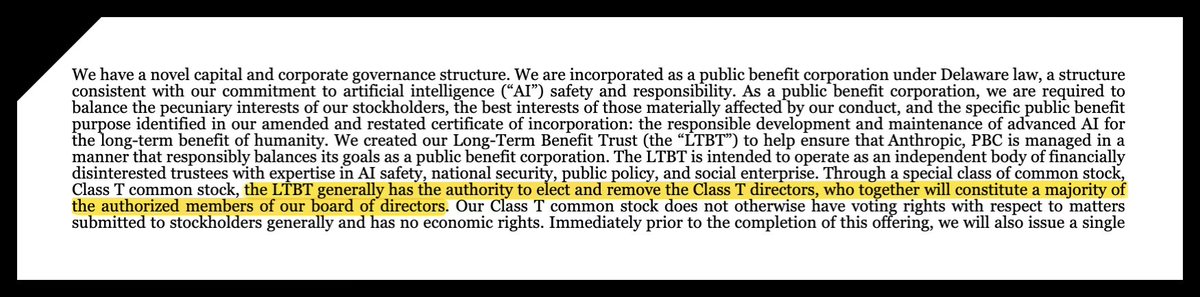
So far, a lot of coverage of the S-1 has focused on the founder control question. Indeed, when it comes to shareholder votes, the Anthropic founders have 50.1% control that cannot be diluted.
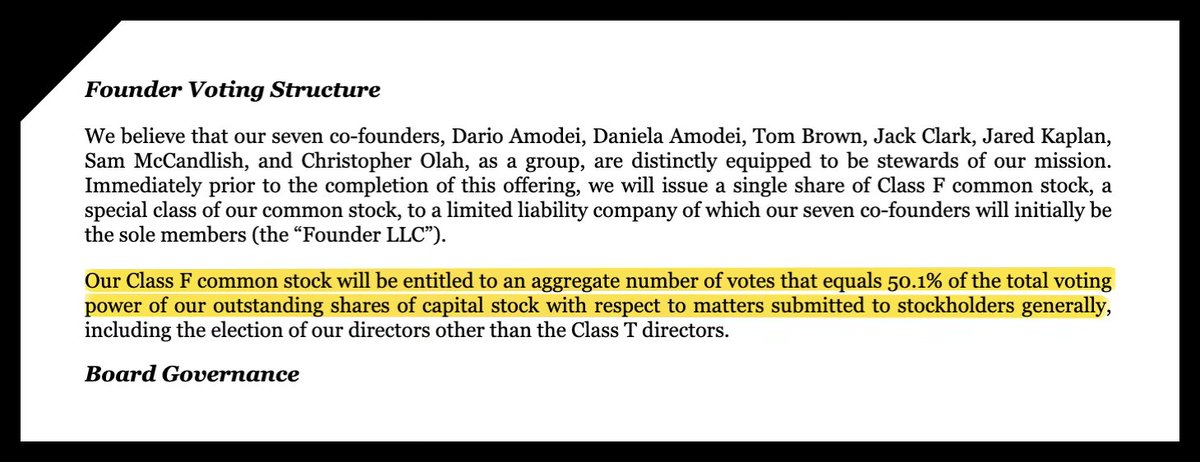
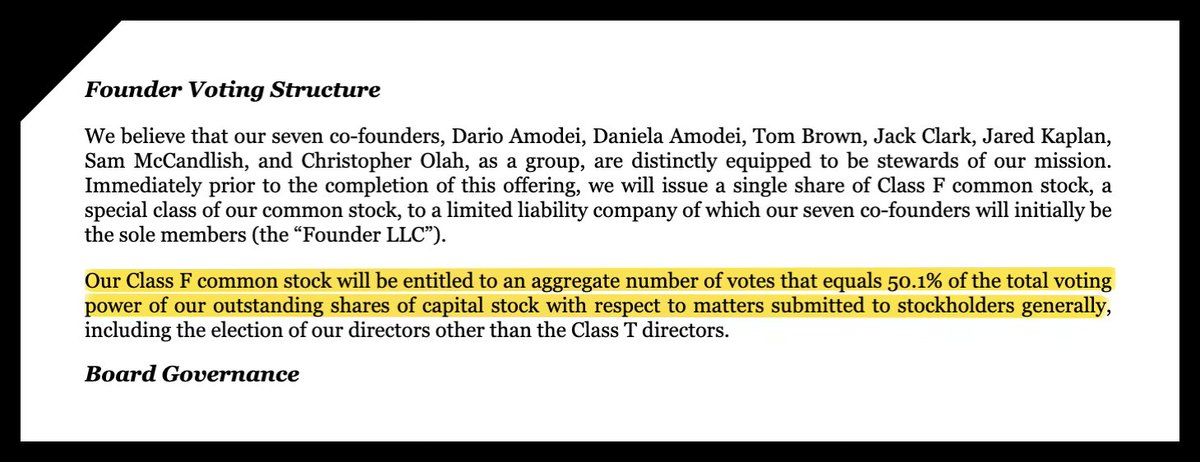
But that is only shareholder votes. Many other decisions are made by the board, and the board is majority appointed by the Long Term Benefit Trust. However, in the past, concerns have been raised (especially from Zach Stein-Perlman’s AI Lab Watch) that this trust could be overpowered by shareholders.
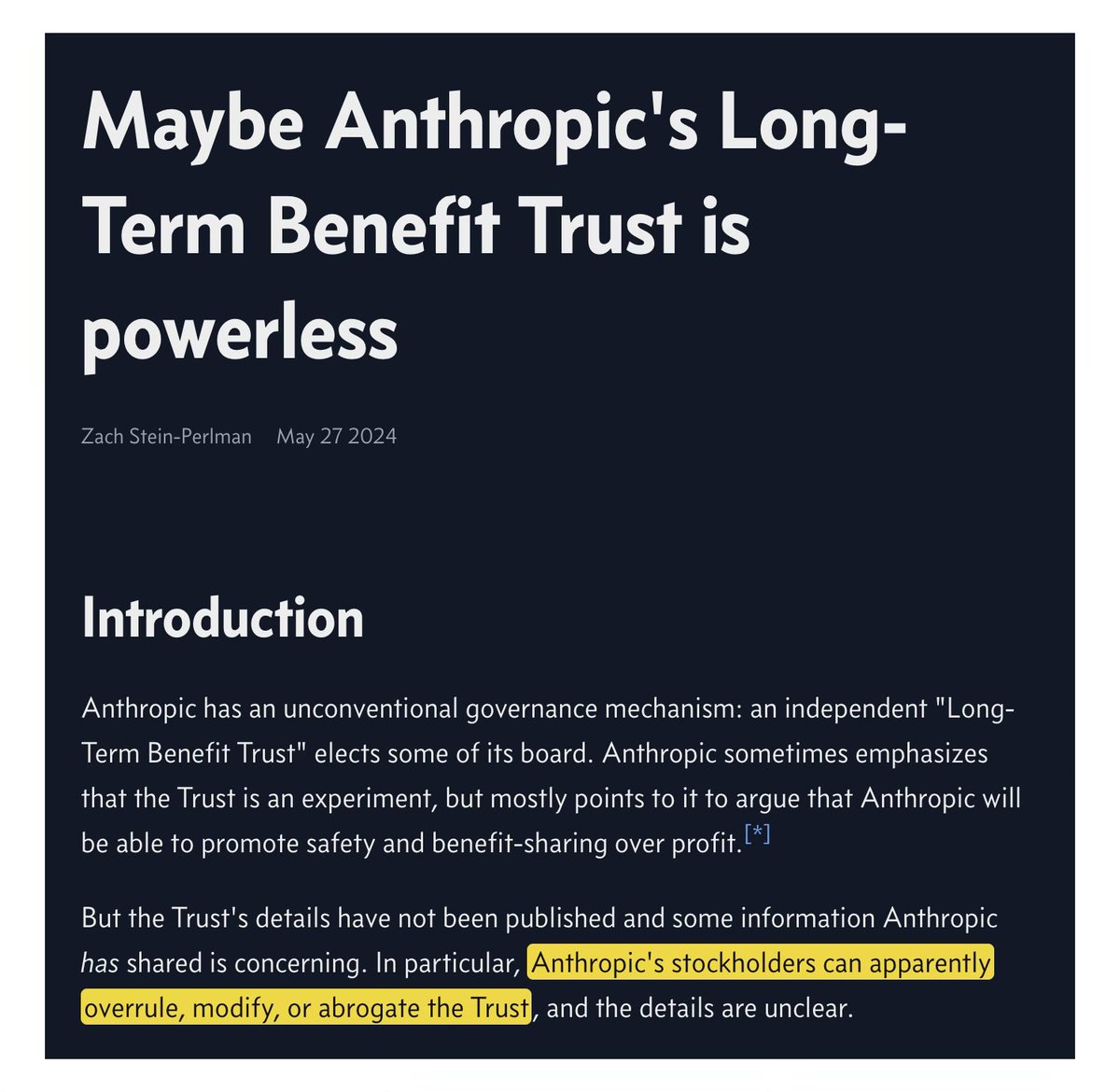
In this critique, Zach asked for the Trust agreement to be released. It is now, and we can see that the main scenario that was feared — investors collectively disempowering the trust — is impossible, at least if they act on their own, and at least while founder control lasts.
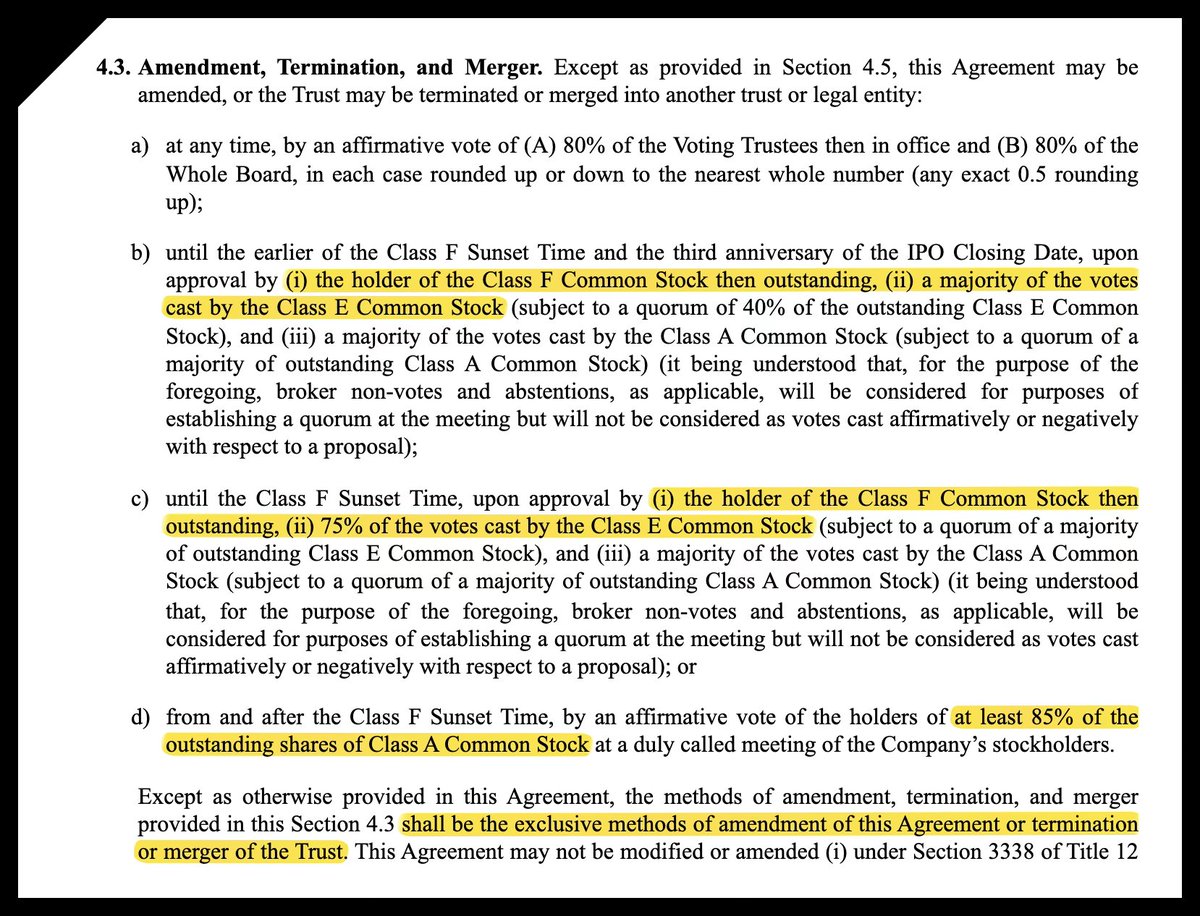
But the trust isn’t all powerful. Even without the trustees' consent, founders, employees and Class A shareholders can work together to rewrite the Trust or redeem its share for nothing.
What would this require? For the first three years, the easiest route would take all 7 co-founders, a majority of employee votes, and a majority of Class A votes.
And they don't have to abolish the Trust to steer it.
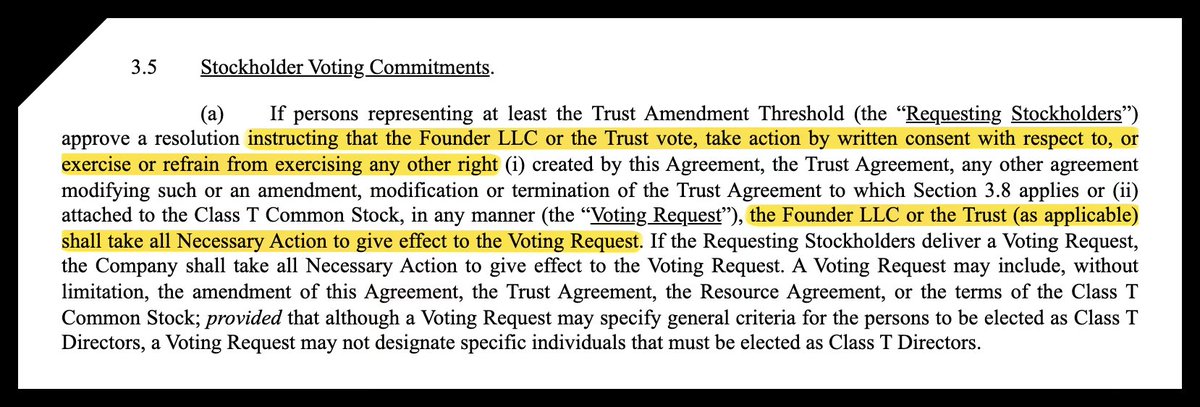
Under the Stockholders' Agreement, while the same coalition can't name specific directors to be appointed by the trust, they can tell the Trust how to vote or act, and the Trust must comply.
The Trust's board majority also has a complicating factor.
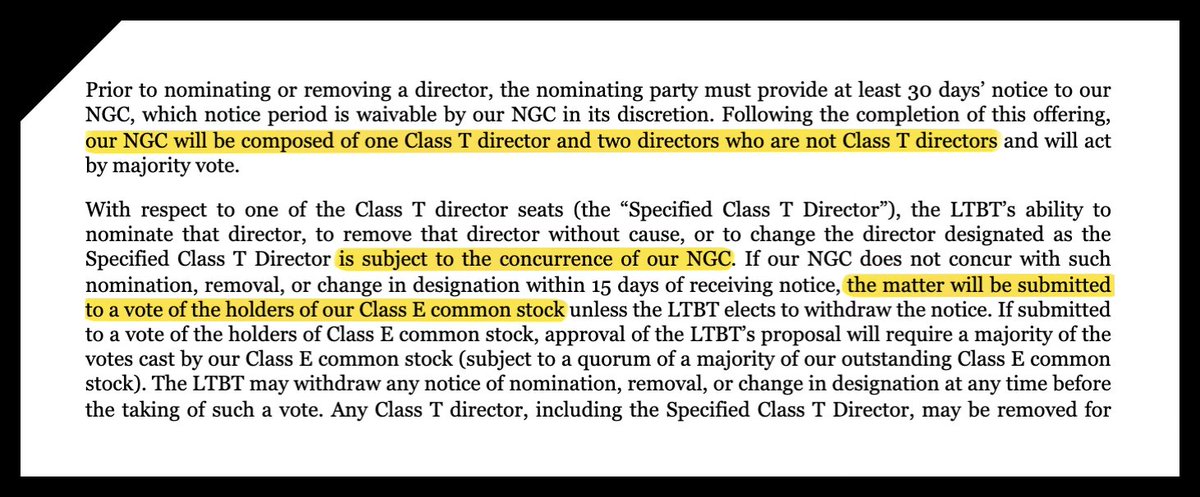
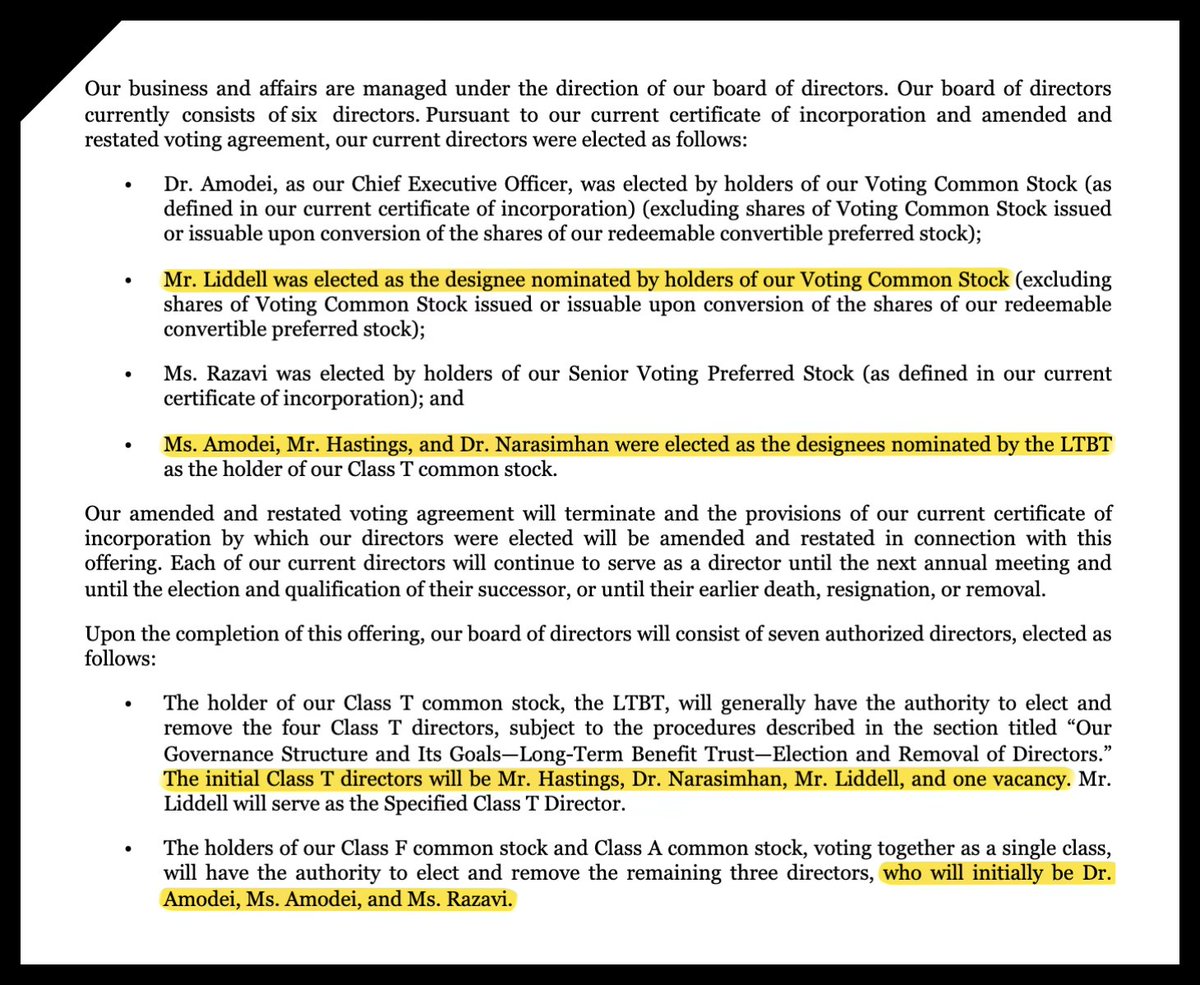
It currently elects four of seven board seats, a narrow majority. But one of its seats, the "Specified Class T Director" (now Chris Liddell), can't be filled or removed without cause unless a board committee where non-Trust directors hold 2 of 3 seats agrees. If it doesn't, employees vote.
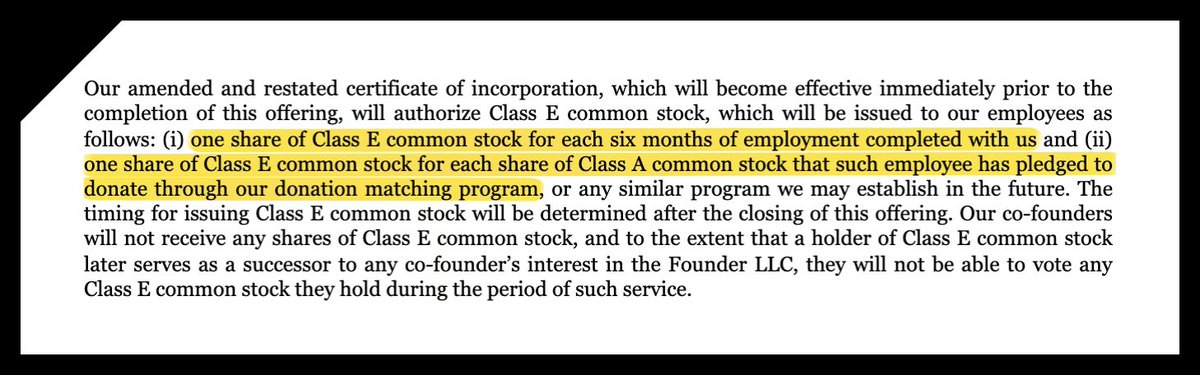
Also, in what sense can employees override the LTBT, and who counts? The answer here is interesting. New Class E stock gives employees 1 vote per 6 months of tenure, plus 1 vote per share they've pledged to donate through Anthropic's matching program.
This means voting power is almost entirely based on how much money employees keep for themselves versus how much they give away.
The filing also shows who has held the board seats the trust appoints. Before the IPO, the Trust's board designees included Anthropic's President, Daniela Amodei, while Liddell was elected by common holders.
At the IPO they swap sides, and one Trust seat is vacant.
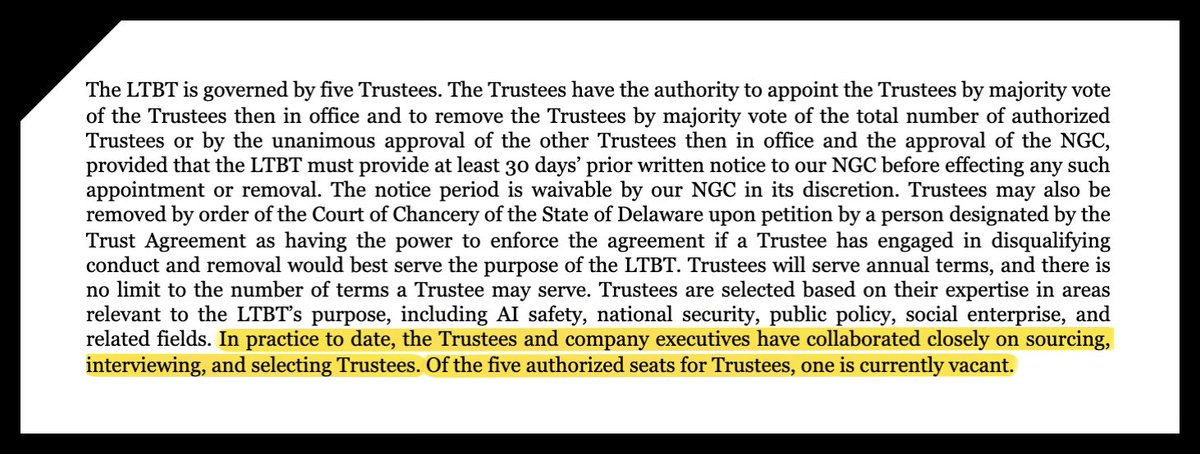
The Trust itself isn’t particularly independent or established. One of five trustee seats is empty, and executives have "collaborated closely" with trustees on choosing new ones.
If the Trust ever spends over 90 days with fewer than three trustees, it can't use its powers at all.
Worse yet, each trustee is paid $400k per year. We’ve previously flagged how financial interests could influence the trust, and other industry oversight bodies, like OpenAI’s nonprofit board, have rightly left directors uncompensated so their pecuniary interests don't influence decision-making.
The S-1 and the Trust's governing documents (Exhibits 3.3, 10.14 and 99.1) can be read in full on EDGAR.
Research, updates, and insights from the frontlines of AI accountability.
We lead strategic initiatives to monitor tech companies, counter corporate propaganda.
Who paid right-wing influencers to promote Nvidia chip sales to China?
Hundreds of fake accounts defended Jensen Huang and attacked lawmakers over chip exports.
It has been a month. Where’s Muse Wonder’s safety report?
The Midas Project Joins Coalition Warning about xAI’s Track Record in light of SpaceX’s IPO
The Midas Project, alongside a coalition including Encode, Legal Advocates for Safe Science and Technology, and Guidelight AI Standards, released "xAI: The Unpriced Risk in SpaceX's IPO."
Frequently asked questions
Have more questions? Our team is happy to help, contact us.